
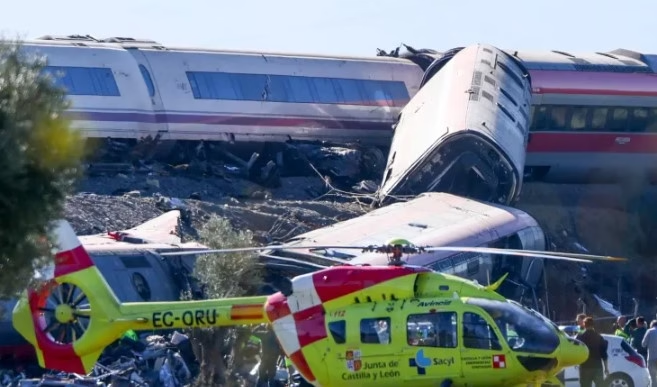
Washington : A collision between two high-speed trains in Spain on Wednesday morning claimed 46 lives. Preliminary reports suggest that human error was primarily responsible for the accident.
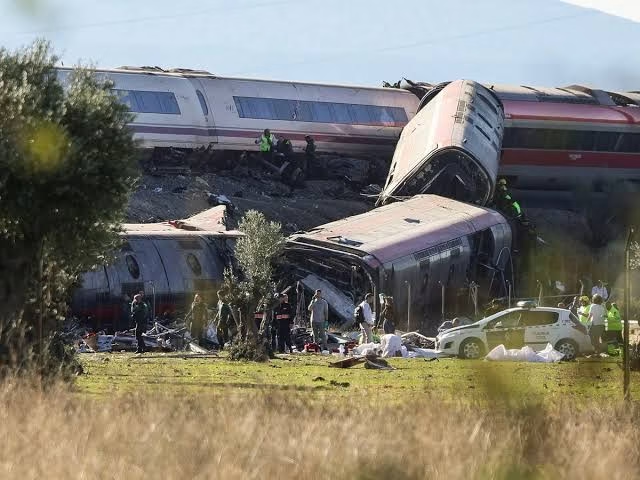
The incident is suspected to have occurred because the railway network operator failed to perform their duties properly when the main signalling system became dysfunctional.
The trains are equipped with an automatic safety system. When a fault occurs, the system can be switched to manual mode. A sudden technical failure in the automatic safety system forced the trains to stop on the tracks in accordance with safety protocols.
However, when train operations resumed, a serious error by the operator reportedly resulted in two trains entering the same track, leading to the devastating collision.
According to government spokesperson Esther Padilla, investigators are examining why one of the trains had remained stationary on the track.
The railway line where the accident occurred was operating with an ageing signalling system that had been in use since the 1980s. Modernisation work on the railway line was underway, and the project was nearing completion when the tragic accident occurred.
Spanish Prime Minister Pedro Sánchez expressed deep sorrow over the incident. Describing it as a serious railway accident, he extended his heartfelt condolences to the victims and their families.
The accident has once again raised questions about railway safety in Spain, which has one of the largest high-speed rail networks in Europe.
In January this year, another train derailed in southern Spain and collided with a second train, killing 45 people.
About the Author