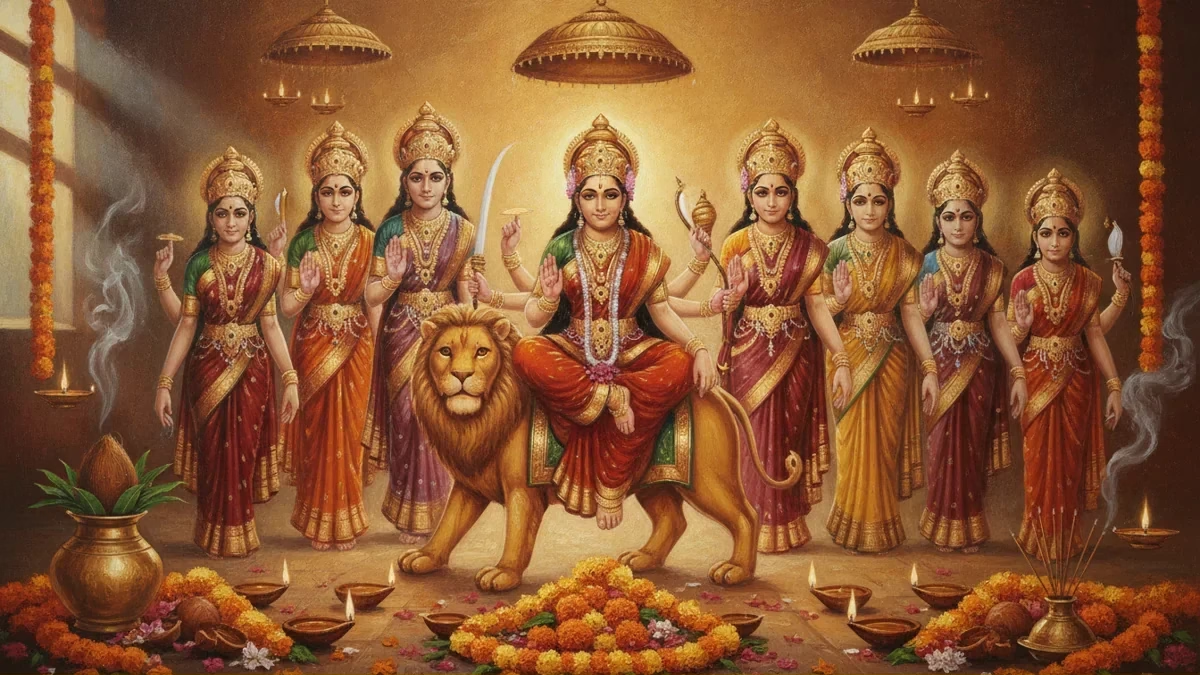
In Indian culture, the glory of Goddess Durga is described in the ancient Vedic Durga Sukta. It is believed that reciting the mantras of the Durga Sukta helps remove sorrow and suffering and destroy negative tendencies.
Across the villages and rural communities of Odisha, the worship of Goddess Durga as Stambheshwari, the village deity, has long been practised. In this tradition, the forest goddess, or Vana Durga, is represented by stone structures or wooden pillars and worshipped as the presiding deity of the village. The ritual known as Deung Mangula, performed at the beginning of auspicious ceremonies, is also regarded as one of the oldest forms of Durga or Devi worship in Odisha’s cultural tradition.
The spiritual reformer and Yugapurush, Bhagawan Sri Sri Thakur Anukulchandra, said that worshipping the Divine Mother means worshipping one’s own mother. The Mother is not merely the ten-armed idol placed on a temple altar; she is also the living, two-armed mother present in every household. The mother of the family and the Mother of the universe are manifestations of the same divine form.
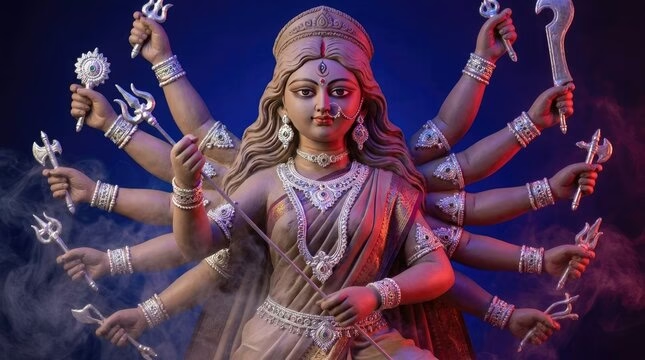
The ten arms of Goddess Durga symbolise the ability of a mother, with her two hands, to perform the work of ten. The ten weapons she carries represent the various powers of the Divine Mother. Through these powers, she defeats and restrains evil forces to protect her children.
As the destroyer of suffering and misfortune, Goddess Durga carries ten weapons and dedicates herself to the protection of her children. She has vanquished demons such as Chanda, Munda, Shumbha, Nishumbha and Mahishasura, symbolising the triumph of divine power over evil.
Since Durga Puja is celebrated during the autumn season, Goddess Durga is also known as Sharada. The Mother wishes well for all her children and embraces everyone with love. For this reason, she is also known as Jagaddhatri, the Mother who sustains and nurtures the universe.
She brings together what is scattered and reconciles what is divided, creating harmony and unity among people. Therefore, Durga Puja is not merely a ritual involving flowers and bilva leaves; it is a grand celebration of human unity, love, harmony and togetherness.